

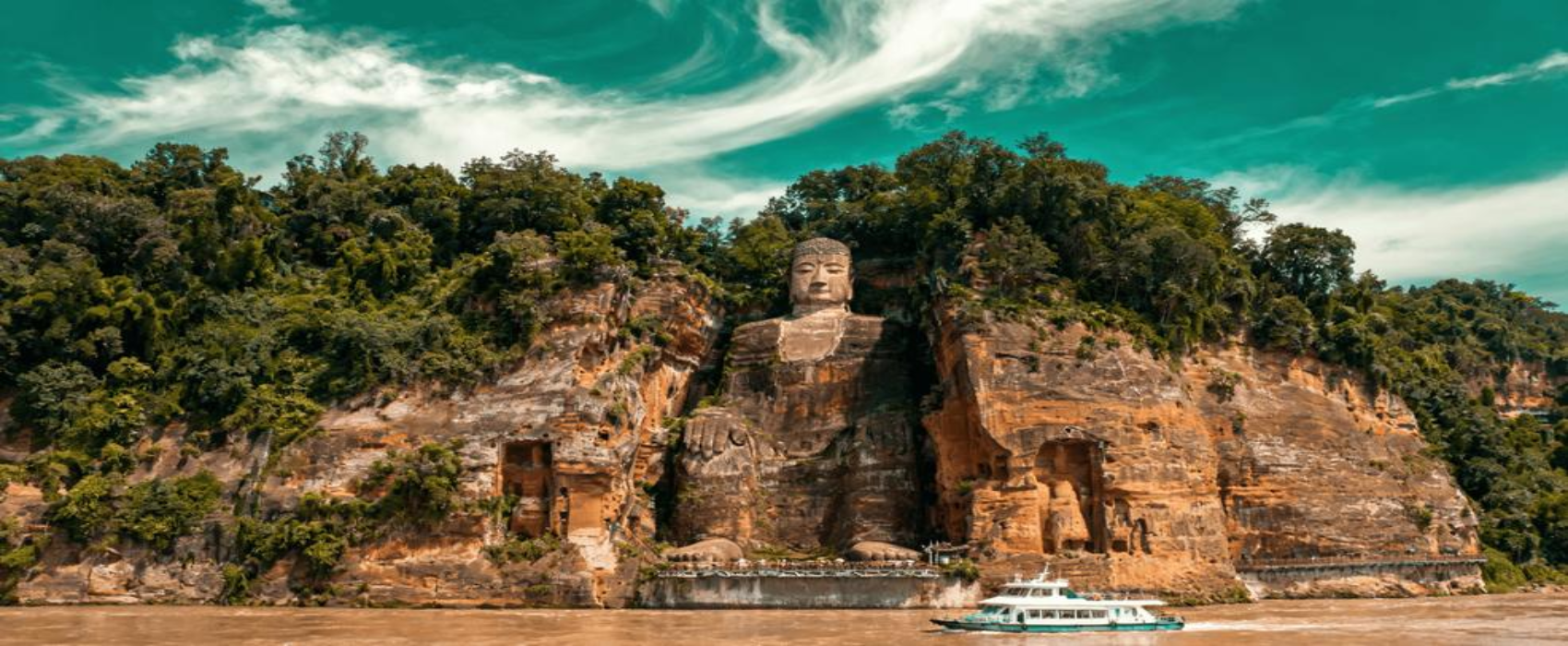

1、Leshan Giant Buddha Information
Location: No. 2435, Middle Section of Lingyun Road, Leshan City, Sichuan Province
Construction Period: 713–803 AD
Height: 71 meters (233 feet)
The Leshan Giant Buddha is a seated statue of Maitreya Bodhisattva (Maitreya is typically depicted as a plump, smiling monk with his chest and abdomen exposed). Located in eastern Leshan City, Sichuan Province, at the confluence of the Minjiang, Qingyi, and Dadu Rivers, it is the city’s most famous attraction. In December 1996, the site of the Leshan Giant Buddha was inscribed on the UNESCO World Heritage List. Construction began in 713 AD during the Tang Dynasty and was completed in 803 AD, requiring over 90 years of carving. Throughout this lengthy period, thousands of artisans poured their dedication and ingenuity into the project. As the world’s largest stone-carved Buddha statue, the giant Buddha frequently appears in poetry, songs, and stories.

2. How large is the Leshan Giant Buddha?
Facing the river with symmetrical posture and solemn, serene expression, the statue is breathtaking. Standing 71 meters tall (approximately 233 feet), its fingers measure 8.3 meters long (about 27 feet). The 9-meter-wide (about 30 feet) instep can comfortably seat a hundred people, while the 24-meter-wide (about 79 feet) shoulders are broad enough to accommodate a basketball court.
3. Architectural Highlights of the Leshan Giant Buddha
The Buddha’s appeal lies not only in its colossal scale but also in its exquisite architectural artistry. The coiled hair features 1,021 knots, masterfully embedded into the head with such skill that they blend seamlessly into the overall form. Another architectural marvel is the drainage system. This intricate network of hidden channels runs through the head, arms, behind the ears, and within the robes. Designed to channel rainwater away, it keeps the interior dry and plays a vital role in preserving the statue. The statue’s enormous ears, each measuring seven meters (approximately 23 feet) in length, are crafted from wood and finished with a clay surface. For artisans working thousands of years ago, securing such massive ears to the stone head was no simple feat.

4. History of the Leshan Giant Buddha
This project was initiated by a monk named Haitong. His concern lay with the safety of the suffering people near the confluence of the three rivers. The turbulent waters caused frequent boat accidents, and the simple folk blamed these disasters on water demons. Thus, Haitong resolved to carve a Buddha statue by the riverbank, believing the Buddha could subdue the water demons. Moreover, the stones chipped away during carving would weaken the river’s force. After two decades of begging, he finally gathered sufficient funds. When local officials coveted the money, Haitong declared they could gouge out his eyes but would never seize the funds raised for the Buddha. After Haitong gouged out his own eyes, the officials fled in terror. When Haitong passed away, the project was only half complete. His two disciples continued the work, and after ninety years of diligent effort, the project was finally completed.
Renowned worldwide for its ancient history, the restoration of this giant Buddha has drawn extensive attention both domestically and internationally. Before the Chinese government began repairs in 1963, the statue had been nearly eroded away by wind and rain. Currently, restoration work is underway under the guidance of UNESCO experts.