

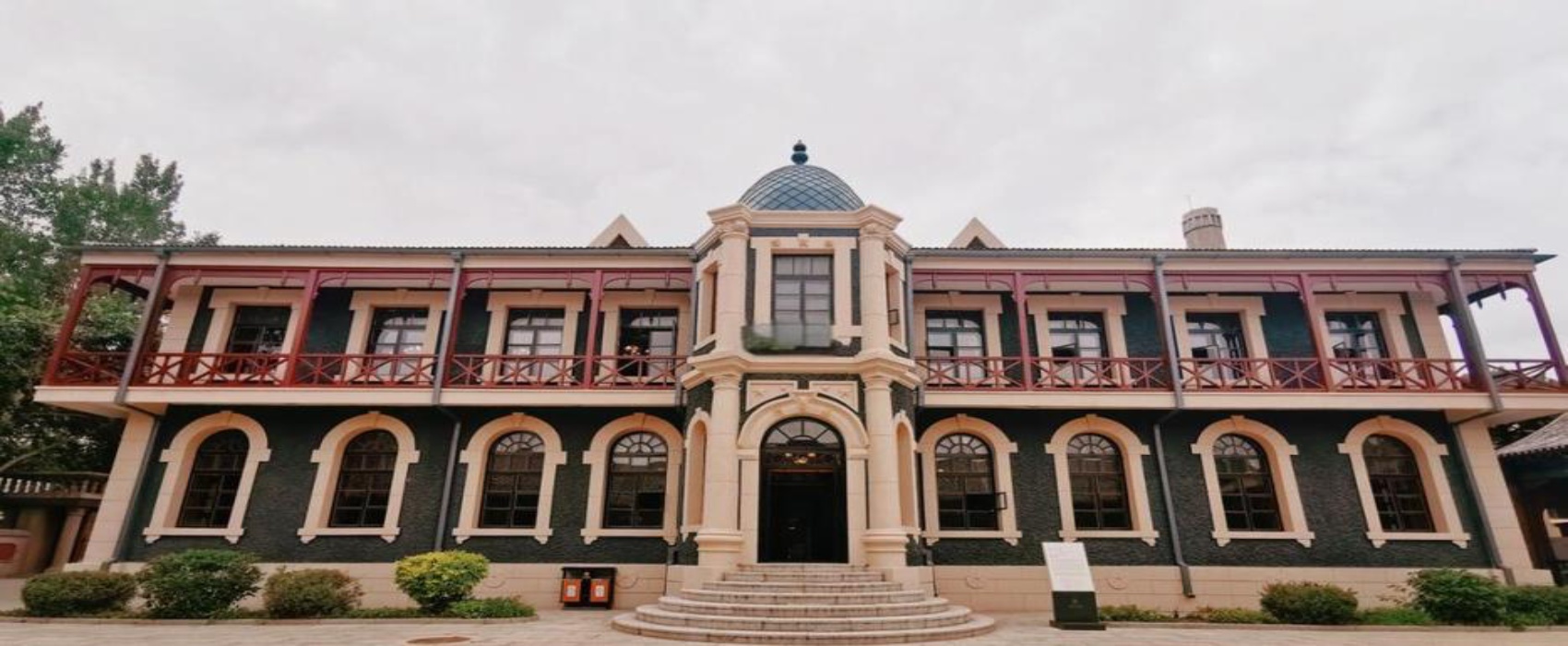

The Imperial Palace Museum of the puppet state of Manchukuo is located in Changchun City, Jilin Province, in northeastern China. From 1932 to 1945, it served as the residence of the last emperor, Puyi, and was also the headquarters of the puppet state of Manchukuo, established by Japan after its invasion of Northeast China.
In 1931, Japan invaded Northeast China and forcibly occupied three provinces in the region. To control the region, they established the Manchukuo puppet state (1932-1945) and installed Puyi, the last emperor of the Qing Dynasty, as its nominal head of state. However, Puyi was effectively a puppet of the Japanese military. Subsequently, Japan constructed an imperial palace in Changchun where Puyi conducted state affairs according to the directives of his Japanese masters. Ultimately, in 1945, World War II ended with Japan’s surrender to China. Simultaneously, the Manchukuo state ceased to exist, and Puyi reverted to civilian status.
Puyi has long since passed away, and the past is now history. Although the puppet Manchukuo Imperial Palace suffered some damage in 1945, most of its buildings and facilities remain well-preserved to this day. In 1962, the Manchukuo Imperial Palace Museum was rebuilt at its original site on Guangfu Road in Changchun. Today, the protected area spans 137,000 square meters (33.85 acres), with exhibition space covering 47,000 square meters (11.61 acres).
The museum’s exhibits are divided into three sections: displays related to the colonial period, thematic exhibitions, and exhibits showcasing the daily life of the emperor and his consorts. The museum’s rich collection includes carpets from the Jingren Palace in the Forbidden City and documents personally signed by Puyi. The entire palace complex is surrounded by high walls and contains approximately ten structures. The main palace is divided into the Outer Palace and the Inner Palace. The Outer Palace served as the emperor’s seat of governance for the puppet regime and hosted various ceremonies, including the Qinpu Mansion, Huaiyuan Garden, and Jiale Palace. Additionally, the Outer Palace featured recreational areas such as gardens, artificial hills, swimming pools, and a horse racing track. The Inner Palace served as the residence for the emperor and his consorts. For instance, Emperor Puyi and Empress Wanrong resided in the Jixi Palace. The Imperial Palace Museum of the Manchukuo also functions as a research center for the Japanese invasion of China and the history of Manchukuo. In a sense, this museum offers an excellent opportunity for patriotic education.
In summary, the Manchukuo Imperial Palace Museum enables visitors to gain a clear understanding of Manchukuo’s history. For anyone interested in Chinese history, a visit here is highly worthwhile.