

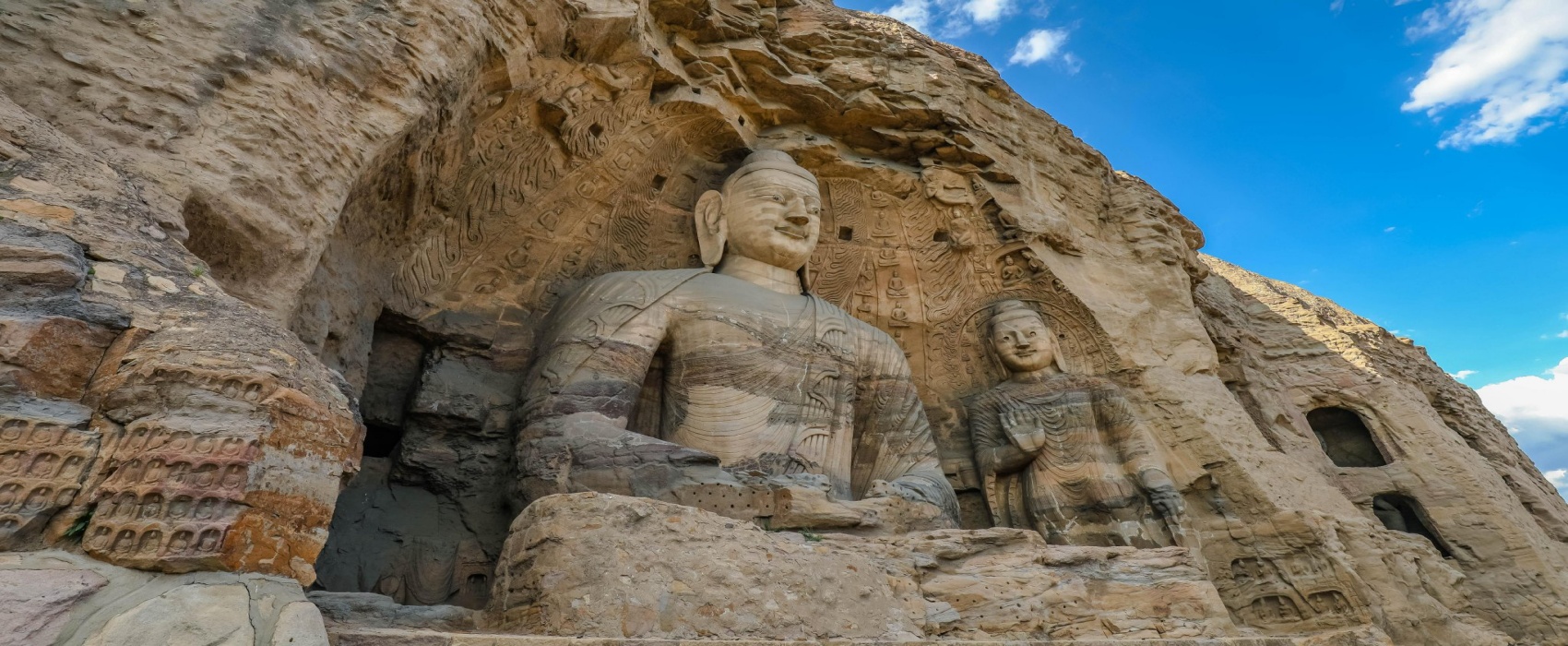

The Yungang Grottoes, one of China’s three major cave complexes, are located on the northern slope of Wuzhou Mountain in Datong City. Carved into the mountainside, the site stretches 1 kilometer (0.62 miles) from east to west and features 53 caves and more than 51,000 stone statues.
The grottoes are divided into three sections: East, Central, and West. The eastern section is dominated by Buddhist pagodas; the western section consists of smaller caves, mostly niches; and the central section comprises caves with two chambers, front and back, with a Buddha statue enshrined in the center. The walls and ceilings of the caves are adorned with relief carvings. The grottoes
were first constructed in 450 AD and are relics of the Northern Wei Dynasty (386–534). The caves draw inspiration from Indian Gandharan Buddhist art, and their sculptures blend traditional Chinese art with the social characteristics of the time.
During the reign of Emperor Xiaowen, the monk Tan Yao was responsible for the construction of the Yungang Grottoes. The largest cave is Cave 6, which stands 20 meters high and features a 15-meter-tall pagoda-shaped stone pillar adorned with Buddhist figures and decorative patterns. A total of 33 reliefs are carved on the four sides of the stone pillar and on the east, south, and west walls of the cave, depicting the life story of Shakyamuni Buddha.
Caves 16, 17, 18, 19, and 20 are particularly noteworthy. Following Tan Yao’s suggestion, five Buddha statues representing the Taizu, Taizong, Shizu, Gaozong, and Gaozu were enshrined within the caves, expressing the religious theme that the emperor is the Buddha. The caves housing these statues are known as the “Tan Yao Five Caves,” which share a similar style but are not entirely identical. The Buddha statue in Cave 20 is majestic and imposing; the one in Cave 19 is handsome and elegant; and the one in Cave 18 is dignified yet vivid. What they share are thick lips, large noses, slanted eyes, and broad shoulders, reflecting the ethnic cultural characteristics of the time.
The Yungang Grottoes vividly recount the splendor of days gone by.