

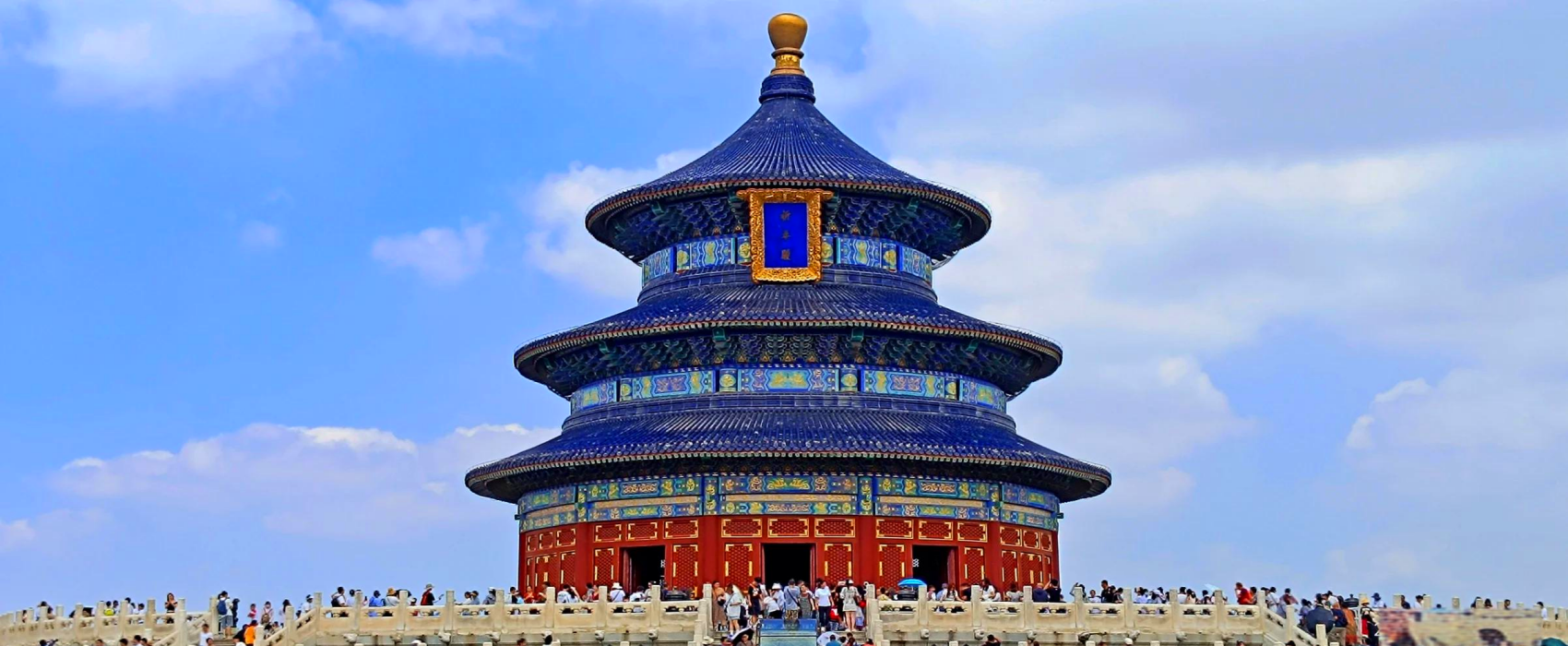

Since its completion in 1420, the Temple of Heaven has served as the imperial site for sacrifices to Heaven. From its iconic blue-tiled roofs to its layout reflecting the ancient Chinese philosophy of “Heaven is round and Earth is square,” it stands as a masterpiece of ancient architectural design. This guide will take you on a tour of the must-see structures, explain their profound symbolism, and suggest the best route so you can both experience the Temple of Heaven’s solemn and sacred atmosphere and immerse yourself in its vibrant local culture.
1. History: When was the Temple of Heaven built? Why was it built?
The Temple of Heaven was first constructed in 1420 during the Ming Dynasty. Initially, it was known as the “Altar of Heaven and Earth,” where sacrifices were offered to both the deities of heaven and earth. In 1530, the sacrificial rites were separated, and the site was renamed the Temple of Heaven. The iconic structure we see today took its final form in the 18th century, when the Hall of Prayer for Good Harvests was topped with its signature blue glazed tiles to better symbolize the sky.
The Temple of Heaven serves three key functions, rooted in power, faith, and practicality:
Demonstrating the emperor’s divine authority: In ancient China, rulers claimed to possess the Mandate of Heaven, deriving their authority directly from the heavens. Grand sacrificial ceremonies held here demonstrated to the world that their rule was endorsed and protected by Heaven.
To pray for bountiful harvests and harmony: China was once an agricultural society. People believed that natural forces such as rain, sunlight, and wind were all governed by Heaven. This temple became the central venue where the nation paid homage to Heaven and prayed for balance, abundance, and favorable weather.
Before the temple was built, emperors had to travel long distances over mountains and rivers to distant sacred sites, such as Mount Tai, to perform important sacrificial rites. The construction of a dedicated, nearby complex of sacrificial altars allowed these crucial ceremonies to be held regularly and efficiently, sparing the emperors the exhaustion of long journeys and minimizing disruptions.
To make the sacrificial rites more efficient and convenient: Before the temple was built, emperors had to travel great distances to perform important sacrificial rites, typically to Mount Tai. The construction of a dedicated, nearby complex of sacrificial altars meant that ceremonies could be held regularly without the need for long journeys or last-minute delays.
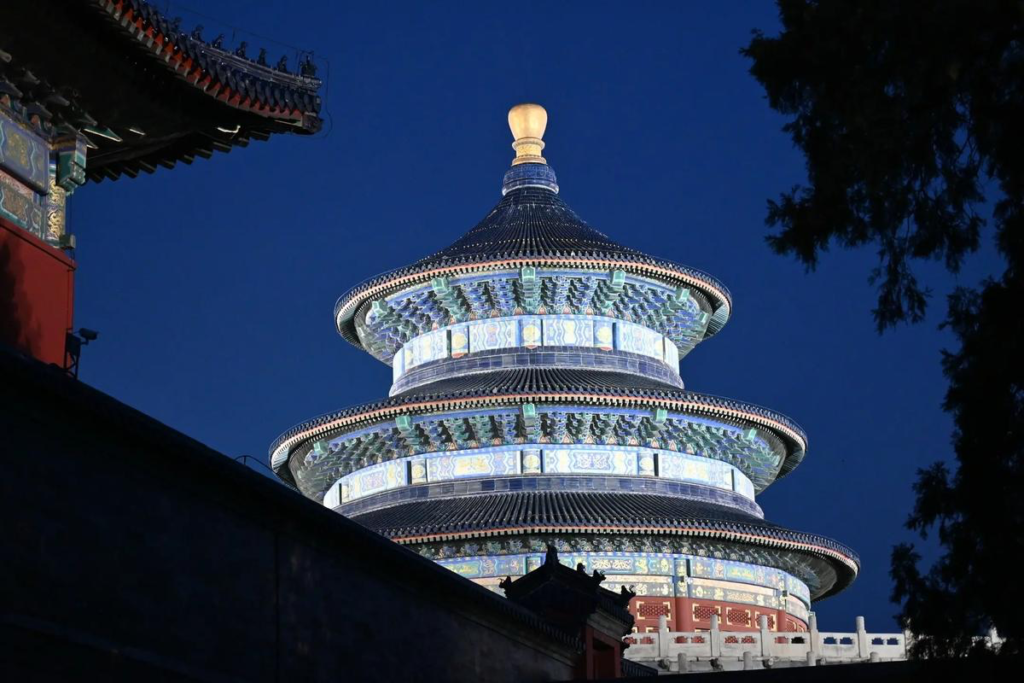
2. The Layout of the Temple of Heaven: “Heaven is Round, Earth is Square” & “Supremacy of Heaven”
The Temple of Heaven is a tangible embodiment of ancient China’s cosmology, rooted in the philosophical concept of “Heaven is round, Earth is square.” This is most evident in the park’s perimeter layout: the northern wall is circular, symbolizing the sky, while the southern wall remains square, representing the earth. As visitors proceed northward, the terrain gradually rises, symbolically guiding them from the earthly realm toward the celestial realm. This geometric structure extends to the architecture itself, most notably in the circular altar set upon a square base, uniting the two great cosmic forces of Heaven and Earth into a single, magnificent architectural composition.
This symbolic significance also explains the Temple of Heaven’s breathtaking scale. The entire complex covers an area of 2.7 million square meters, nearly four times the size of the Forbidden City. This was not an act of imperial ostentation, but rather a display of ceremonial humility. As the “Son of Heaven,” the emperor’s earthly residence—the Forbidden City—could never surpass the majesty of the divine. By constructing the Temple of Heaven on a scale and at a height far exceeding his own palace, the emperor conveyed a visual signal to his subjects: his power was subordinate to divine authority, ensuring that the architectural hierarchy corresponded to the spiritual hierarchy.
3. Hall of Prayer for Good Harvests
This is the temple’s most iconic structure, where emperors of past dynasties held ceremonies to pray for bountiful harvests. Its three-tiered circular roof is covered with blue tiles, symbolizing the vast sky. Remarkably, the entire hall was constructed without a single piece of steel, cement, or nail. Its immense weight is supported by 28 towering wooden columns, joined together through an intricate mortise-and-tenon system. This centuries-old engineering marvel is renowned for its exceptional strength and earthquake resistance.
4. The Summit of the Sky and the Echo Wall
This elegant circular structure was once used to house spirit tablets used in ritual ceremonies. It is renowned for the Echo Wall that encircles it. Thanks to the smooth, continuous curvature of the wall, a whisper uttered at one end can be heard clearly at the other end, 37 meters away. This ingenious 15th-century acoustic design allows sound waves to travel smoothly along the wall with minimal loss.
5. The Circular Earthen Mound Altar
Although the Prayer Hall is more famous, this open-air altar is the spiritual heart of the temple. The emperor performed the Winter Solstice ritual here, the highest ceremony for communicating with Heaven. Every design element of the altar reflects the ancient reverence for the number “nine,” symbolizing the peak of yang energy (positive energy) and the supremacy of Heaven: the stone slabs, railings, and steps of the altar are all multiples of nine.
6. The Red Staircase Bridge
This 360-meter-long elevated walkway connects the two main complexes above. Rising gently from south to north, it symbolizes the ascent from the mortal world to heaven. The walkway features three distinct paths: the central “Path of the Gods” for the gods, the “Imperial Path” for the emperor, and the “Noble Path” for court officials.
7. Make a Wish at the Heart of Heaven
Climb to the top of the circular earthen mound altar and stand on the “Heart of Heaven” stone at its center. Make your wish, and your voice will echo melodiously. It is said that this is the place where the gods can hear you most clearly, ensuring that your prayers reach the heavens.
8. Observe and Participate in Local Life
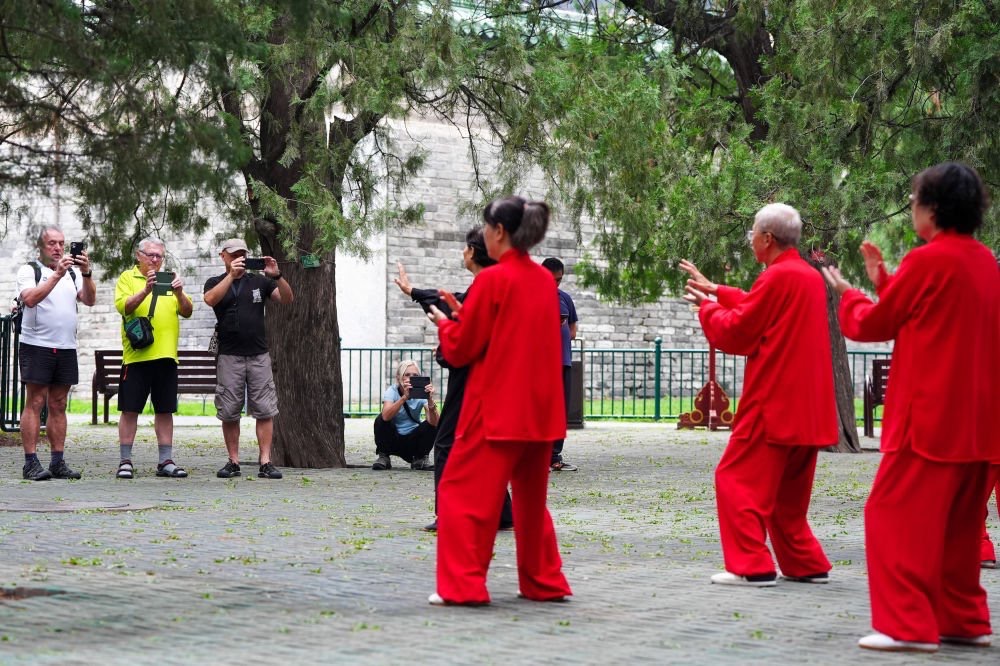
Arrive at the Temple of Heaven before 10 a.m. to experience the most authentic Beijing atmosphere. You’ll see retirees practicing tai chi, their movements slow yet focused. Some kick shuttlecocks with their heads, knees, and feet, while others swing long whips, producing crisp, powerful cracks. On sunny mornings, people also write on the sidewalks with giant water pens. As you walk further, you’ll see elderly people playing chess in the shade of the trees or taking their caged birds for a stroll. If you can, feel free to join them. Try your hand at calligraphy or watch a game of chess—this will make your experience much more than just sightseeing.
9. Touch the 600-Year-Old Guardian Cypress Trees
Leaving the main altar, step into the ancient cypress grove. Among the more than 3,500 trees here, many are over 600 years old. Towering into the sky with gnarled branches, they create a serene and ancient sacred atmosphere. Don’t miss the famous Nine-Dragon Cypress; touching its winding, weathered trunk feels like a direct connection to the profound, silent passage of time and the countless prayers offered here.