

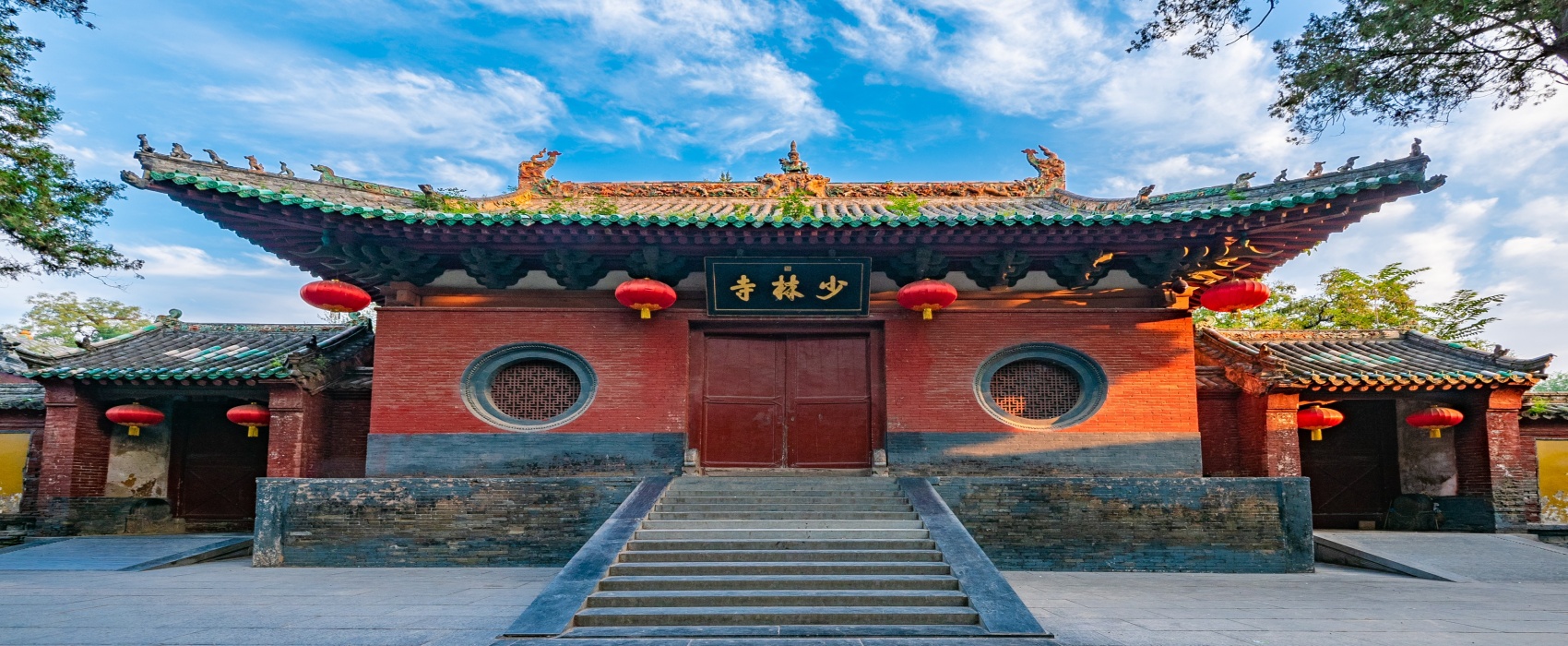

The Shaolin Temple is located in the Songshan region of Dengfeng City, Henan Province, and is widely regarded as “the foremost temple under heaven.” The temple’s history dates back to the Northern Wei Dynasty (386–534 AD), and it has played a pivotal role in the development of Chinese Buddhism. In 2010, the Shaolin Temple was inscribed on the UNESCO World Heritage List as a site of both cultural and natural significance. It is the birthplace of Chinese Chan Buddhism and Shaolin martial arts (such as the Shaolin staff). The mountains are blanketed with wildflowers, the pine forests are lush, and the air is filled with the songs of birds and the fragrance of flowers, while streams flow gently—a vibrant and picturesque scene unfolds before your eyes. The Shaolin Temple features numerous fascinating attractions, such as the Hall of the Four Heavenly Kings, the Great Buddha Hall, the Pagoda Forest, the Dharma Cave, and the Martial Arts Training Center. Visitors can explore the temple using a virtual tour system.
1. The Mountain Gate Hall
The first sight to catch your eye is the Mountain Gate Hall. A plaque hangs above the hall’s entrance, inscribed with the words “Shaolin Temple.” This plaque was erected during the reign of Emperor Kangxi (1622–1723) of the Qing Dynasty. Two stone lions from the Ming Dynasty crouch at the base of the steps inside the hall. The hall houses a statue of Maitreya Buddha. The stone slabs lining both sides of the corridor behind the hall’s entrance are engraved with inscriptions from various dynasties.
2. Hall of the Four Heavenly Kings
Next, we arrive at the Hall of the Four Heavenly Kings. The hall’s entrance is guarded by two statues of Vajrasattvas (Buddhist warrior attendants). Inside, statues of the Four Heavenly Kings are enshrined; they are responsible for observing the conduct of the people, aiding those in distress, and bestowing blessings upon the populace.
3. Mahavira Hall
Next, we arrive at the Great Buddha Hall. The centerpiece of this complex lies right before us. This is where both important celebrations and daily prayer ceremonies are held. There is a statue of an Arhat on both the east and south walls of the hall. The Buddha statues representing the central, eastern, and western directions—namely Shakyamuni Buddha, Medicine Buddha, and Amitabha Buddha—are enshrined here. Statues of Jin Nalu, the founder of Shaolin staff techniques, and the founder of Chan Buddhism are also located beside these three Buddha statues, a layout that is distinctly different from other Great Halls of the Buddha. At the base of the Great Buddha Hall’s columns stand stone lions over a meter tall. The floor features approximately fifty small indentations, each about 20 centimeters deep. It is said these are the footprints left by monks while practicing Shaolin martial arts.
4. Pagoda Grove
Unexpectedly, we arrived at the Pagoda Grove, a burial ground for renowned Buddhist figures throughout history. These pagodas average less than 15 meters (about 49 feet) in height . The number of stories and the shape of the pagodas depend on various factors, such as the monk’s level of spiritual cultivation, his achievements, and his reputation during his lifetime. The Pagoda Forest here is the largest cluster of pagodas in China.
5. The Ancestor Temple and the Second Ancestor Temple
After leaving the Shaolin Temple, we continued northwest, where we visited two temples: the Ancestor Temple and the Second Ancestor Temple. The first temple was built by the master’s disciples in his memory.
6. Nine Years of Meditation in a Cave. Here stands a grand hall supported by sixteen stone pillars, intricately carved with images of warriors, dancing dragons, and phoenixes. The second temple served as the retreat of the Second Patriarch Huike, who severed his own left arm to demonstrate his sincerity in studying Buddhism to the Master. In front of the temple are four springs, known as “Laixi Springs,” which were dug by the Master to make it easier for Huike to fetch water; each has its own unique taste.
7. The Dharma Cave
Next, we come to the Dharma Cave. Legend has it that the Master sat facing the wall in this cave for nine years, meditating in silence, and ultimately attained the state of Zen enlightenment. The Dharma Cave is seven meters (approximately 23 feet) deep and three meters (approximately 9.8 feet) high, with numerous stone carvings on both sides. Inside the cave is a “Zen Stone”; it is said that because the master meditated facing the wall for so long, his shadow was cast onto the stone and deeply etched into it. Unfortunately, this stone was destroyed during the wars.
8. Monks’ Quarters
After passing through the Dharma Cave, we arrive at the monks’ temporary quarters. Located on the south bank of the Shaoxi River, it faces the temple across the water. The quarters were originally built in 1512 during the Ming Dynasty and were later renovated during the Qing Dynasty. Their architectural style is simple yet distinctive, leaving a lasting impression. In 1958, the quarters collapsed and were subsequently rebuilt in 1993.
9. Martial Arts Training Center
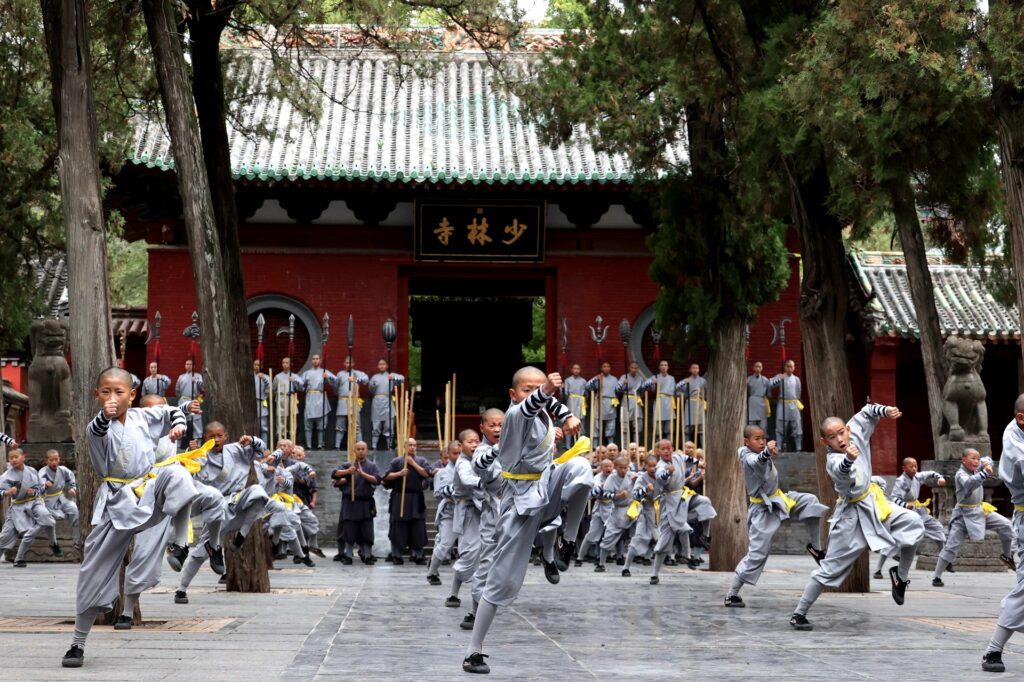
The Shaolin Temple Martial Arts Training Center is the final stop. With its beautiful scenery, it is an ideal place to practice Chinese Shaolin Kung Fu. Shaolin monks have been practicing martial arts for over 1,500 years. This martial arts system was founded by Bodhidharma, who taught the monks basic methods to strengthen their bodies and defend themselves. The martial arts performances showcase authentic Chinese Shaolin Kung Fu. For example, the “Tongzi Gong” performed by the young students is a martial art that trains flexibility and strength.
In short, the Shaolin Temple is well worth a visit. It will give you a deeper understanding of Chinese Buddhism and Chinese martial arts.