

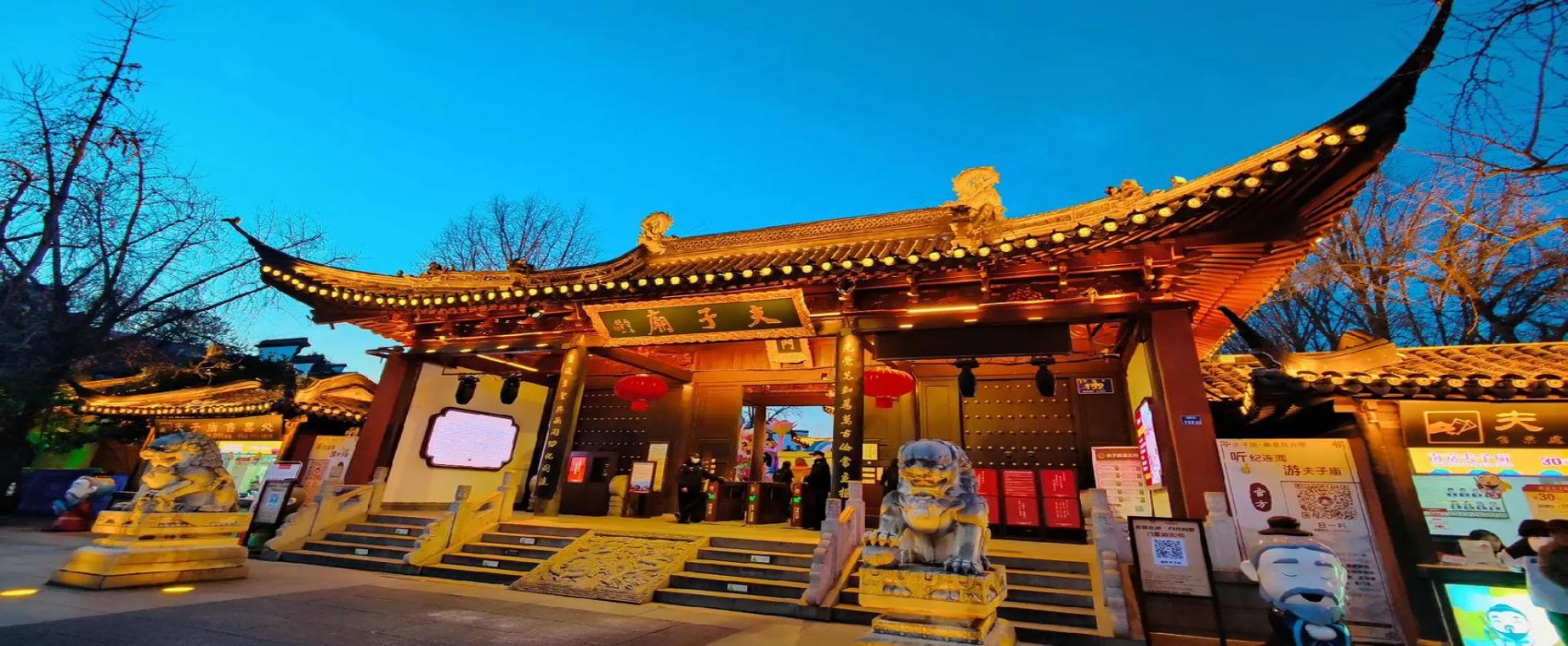

The Nanjing Confucius Temple is a place dedicated to Confucius, the great ancient Chinese philosopher and educator; it is also known in Chinese as the Fuzimiao. The temple was first built in 1034 during the Song Dynasty (420–589 AD), but it was repeatedly destroyed and rebuilt over the years. In 1937, the temple suffered its most severe damage when it was burned down by Japanese invaders. In 1984, with the support of the local government, the Confucius Temple was rebuilt. During the lengthy reconstruction process, the original complex was gradually expanded, eventually becoming a complex that blends architectural styles from the Ming and Qing dynasties. It now includes the Nanjing Confucius Temple, the Imperial Examination Museum, and the Academy (i.e., the National Academy). To this day, both local residents and tourists still habitually refer to it as the Confucius Temple.
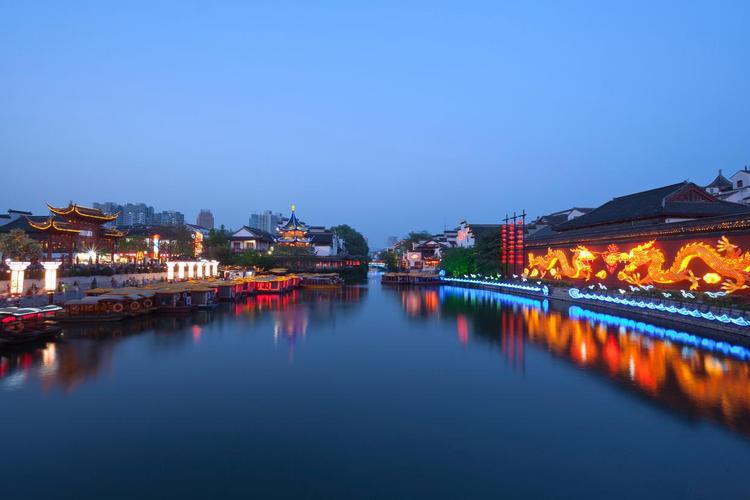
In front of the Nanjing Confucius Temple, the Qinhuai River winds its way through the landscape. On the south bank stands China’s longest screen wall, measuring 110 meters (about 120 yards) in length and constructed of brick and stone. The Great Hall of Achievement is a must-see during your visit. It stands 16.22 meters (about 53 feet) tall and 28.1 meters (about 30 yards) wide, with a 1.5-meter (about 5-foot) high base. Inside the hall, there are two highlights: first, the largest statue of Confucius in China; and second, 38 exquisite reliefs crafted from jade, gold, and silver, vividly depicting the life of Confucius. Outside the Great Hall of Achievement, you can also see a bronze statue of Confucius and white marble statues of his eight disciples.
A visit to the Jiangnan Gongyuan offers a deep insight into how the ancient Chinese government selected officials—it’s an absolute must-see. Founded during the Southern Song Dynasty, the Gongyuan flourished through the Ming and Qing dynasties, eventually becoming China’s largest imperial examination academy by the Guangxu era of the Qing Dynasty. The main building of the Gongyuan is the three-story Mingyuan Tower, which houses 20,644 examination rooms. Today, the site houses a museum dedicated to the ancient imperial examination system. Visitors can also take part in simulated exams to experience the joys and sorrows of the candidates.
The area around the Nanjing Confucius Temple is home to numerous souvenir shops, snack stands, restaurants, and teahouses, most of which feature architectural styles from the Ming and Qing dynasties. It offers a wide variety of snacks representing the eight classic flavors of Nanjing, catering to the tastes of all diners and serving as an integral part of the city’s culinary culture.
Not far from the pedestrian street lies Bailuzhou Park, which offers a serene and peaceful atmosphere in stark contrast to the bustling surrounding area. If you’re seeking a moment of tranquility, head to Bailuzhou Park to experience another side of Nanjing.