

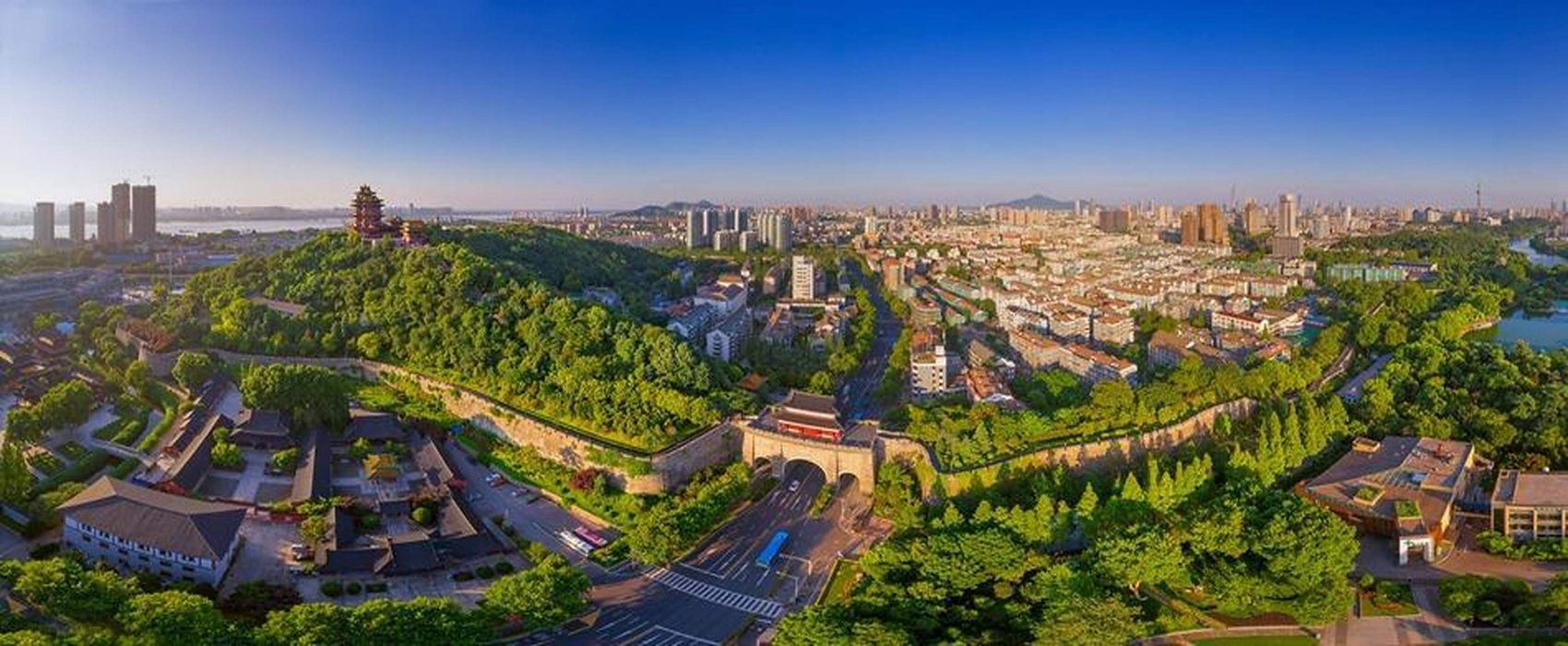

The Nanjing City Wall is one of the national key cultural relics protection units from the Ming Dynasty (1368–1644) and a masterpiece of ancient Chinese architecture. The wall originally had a circumference of approximately 35 kilometers (22 miles), stood 14–21 meters (46–67 feet) tall, and had a base width of about 14 meters (approximately 46 feet). The surviving sections of the wall stretch for about 21 kilometers (13 miles). Nanjing is one of the few cities in China that still retains its ancient city walls, which are in good condition, with most sections still standing today. Despite being approximately 600 years old, the Nanjing City Walls remain imposing and possess significant cultural heritage value.
In 1366 AD, Zhu Yuanzhang, the founding emperor of the Ming Dynasty, accepted his chancellor’s advice and began construction of the Nanjing City Wall. After 21 years of arduous construction, the wall was completed in 1386. According to historical records, Zhu Yuanzhang ordered 118 counties across five provinces and twenty fiefdoms to produce bricks. Each brick weighed about 10 kilograms and measured 40–50 centimeters in length, 20 centimeters in width, and 10 centimeters in height. The names of the officials responsible for the bricks’ quality were engraved on them. According to statistics, approximately 350 million bricks were used in the construction of the Nanjing City Wall.
The Nanjing City Wall consisted of four sections, arranged from the outer to the inner: the Outer City, the Inner City, the Imperial City, and the Palace. In 1390, to strengthen defenses, Nanjing constructed a 180-kilometer (112-mile) diamond-shaped outer city wall. Today, the outer city wall no longer exists, with only the names of its 18 gates remaining. What we see today as the Nanjing City Wall are primarily the ruins of the inner city wall. The Imperial City was built to protect the Forbidden City, which was called the “Forbidden City” because it was situated at the center of the four city walls.
Located on the south bank of the Yangtze River, Nanjing features abundant rainfall, rolling hills, and meandering rivers, making the construction of such a massive wall an extremely challenging undertaking. However, the ancient Chinese overcame all difficulties with their superb craftsmanship, selecting appropriate materials based on the terrain to build the walls. Ultimately, they constructed the Nanjing City Wall, which boasts an ingenious layout, a sturdy structure, and a strategically advantageous location.
The inscriptions on the bricks of the Nanjing City Wall are an important cultural heritage. These inscriptions fall into two categories: those by literati and officials, and those by artisans or common people. The former feature elegant and refined calligraphy, encompassing major calligraphic styles, with the origin of one style even being untraceable. Through them, we can trace the evolution of Chinese characters and appreciate the cultural fusion of the Ming Dynasty. These inscriptions serve as historical scrolls, documenting the changes the city walls have undergone through the ages and providing indispensable materials for the study of Nanjing’s history.
The citizens of Nanjing place great importance on the preservation of the city walls, as they symbolize the city’s history. The municipal government has constructed a five-meter-wide walkway near Jiefang Gate to facilitate visitors’ access to the walls. Although the scale of the Nanjing City Walls cannot rival that of the Xi’an City Walls, they remain the longest city walls in the world.