

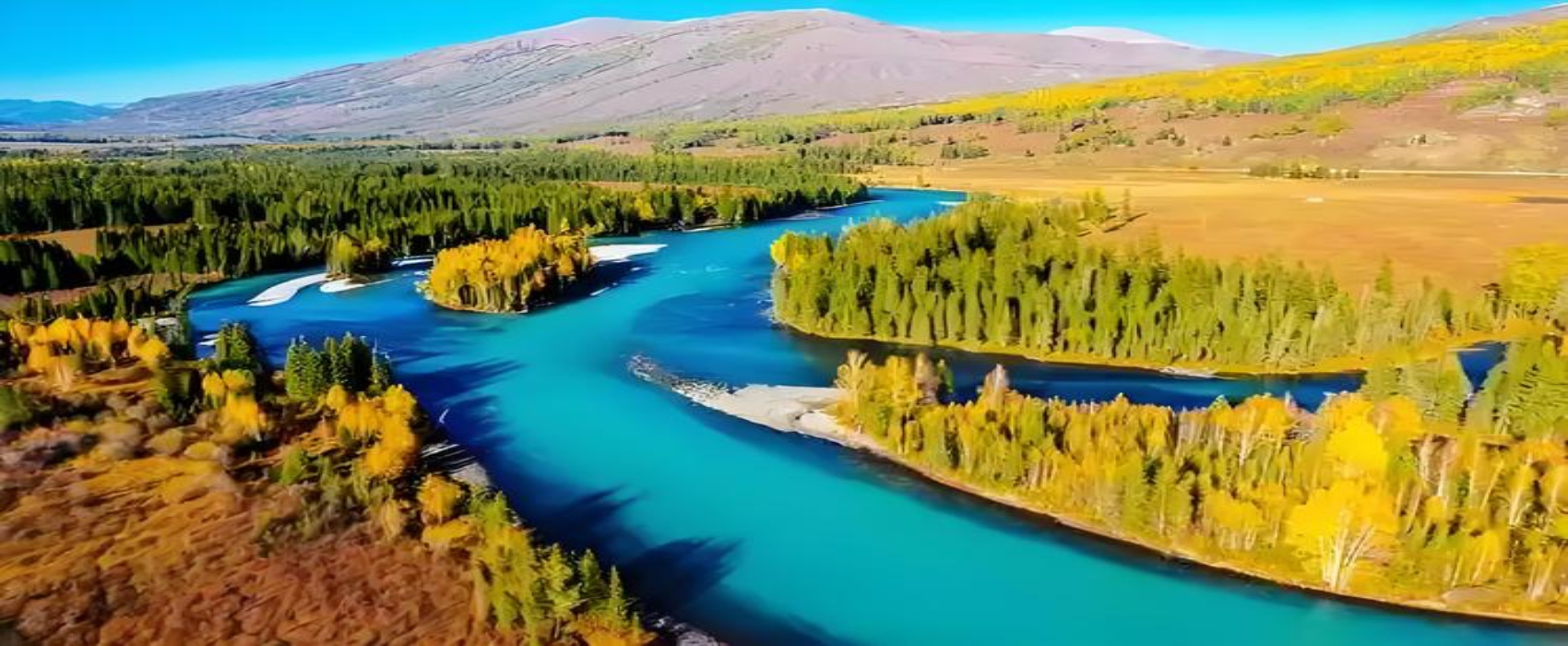

Kanas Nature Reserve, also known as the Xinjiang Kanas National Geopark, is located in Burqin County, Altay City, Xinjiang Uygur Autonomous Region, bordering Kazakhstan, Russia, and Mongolia. This scenic area boasts a stunning natural ecosystem comprising lakes, rivers, glaciers, forests, and grasslands.
1. Kanas Lake in Kanas Nature Reserve
Kanas, meaning “rich, beautiful, and mysterious” in Mongolian, is perhaps northern Xinjiang’s most enchanting vacation destination. Kanas Lake undoubtedly stands as the crown jewel of this nature reserve. The Kanas River originates from the Kanas Glacier in the Altai Mountains, winding its way for approximately 125 kilometers (77.7 miles). The lake appears like a pearl set upon the rippling emerald waters of the river. Kanas Lake sits at an elevation of 1,375 meters (4,511 feet) and spans an area of 45.73 square kilometers (11,300 acres). The lake’s color shifts with the changing climate and seasons, sometimes appearing blue, sometimes green, and at other times as white as milk.
2. The Six Bays Along the Shore of Kanas Lake
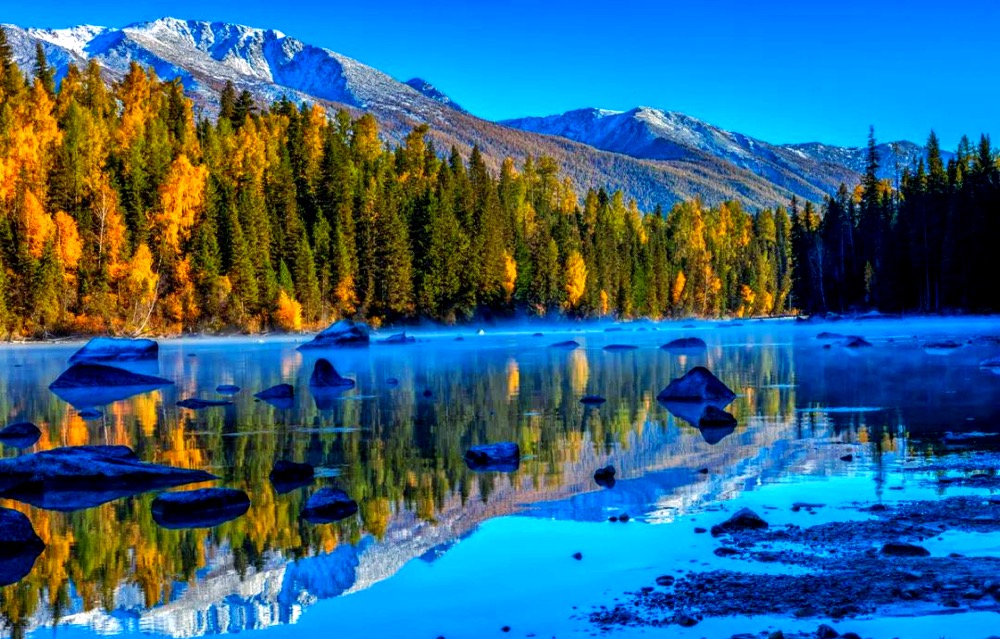
Kanas Lake boasts six bays, each harboring a remarkable tale. The first bay features a “Sheep Rock,” a glacier-eroded bedrock formation resembling a sleeping sheep. It quietly admires the beautiful lake scenery, as if welcoming visitors from around the world. The second bay is the deepest part of Kanas Lake and the location where lake monsters are frequently “sighted.” It is said that some local livestock have been dragged into the water by the Kanas Lake monster! The third bay offers a natural platform for admiring the lake’s grandeur; the fourth bay holds a small island shaded by green trees; the fifth bay is home to a flock of magpies. The sixth bay, located at the lake’s far end, is hailed by all visitors as a natural wonder. Here lies a 2,000-meter-long (approximately 6,562-foot) embankment of dead trees. No one can explain why these trees didn’t float downstream, but locals say even the trees refuse to leave this beautiful lake. Across the lake stands a pavilion named “Fish-Viewing Pavilion.” Perched on a hillside, it offers visitors a panoramic view of the entire area’s stunning scenery.
3. Wolong Bay and Moon Bay
Beyond Kanas Lake, Wolong Bay and Moon Bay also draw crowds of tourists and photography enthusiasts. With primeval forests, flower-strewn grasslands, and crystal-clear emerald waters, the entire region resembles a paradise on earth.
4. Hemü Grassland
Where the Kanas River meets the Hemü River lies the Hemü Grassland. Flowing from northeast to southwest, the Hemü River divides the grassland into two distinct sections. Rare wildlife such as red deer, marmots, and snow grouse coexist harmoniously alongside cattle and sheep.
5. Hemu Village
Hemu Village is one of the three major settlements of the Tuvan Mongols in China. The Tuvan Mongols are believed to be descendants of Genghis Khan’s western expeditionary forces. The Tuvan Mongols of Hemu Village live in wooden houses partially buried underground to withstand the harsh winter cold. They practice Buddhism and have preserved their tribal traditions remarkably well. Religious ceremonies and traditional festivals are always vibrant celebrations, while the area’s natural landscapes draw visitors to experience the untamed beauty of wilderness. Beyond ancient Tuvan Mongolian culture, travelers can immerse themselves in local customs and daily life by staying with hospitable Kazakh families on the Hemu grasslands.
Within the Kanas Nature Reserve, numerous other breathtaking attractions await, such as Duck Marsh Lake, Twin Lakes, White Lake, and the glaciers of Friendship Peak. Visitors can fully appreciate the harmonious coexistence of humanity and nature while marveling at the reserve’s magnificent scenery.
6. Tips
Because of the long winter in Kanas, the best time to visit is from June to October.
As the site is located along the border of China, you have to apply for a Frontier Permit for Burqin County.